



Last Updated on September 24, 2026 by Law Offices of Justin E. Sterling
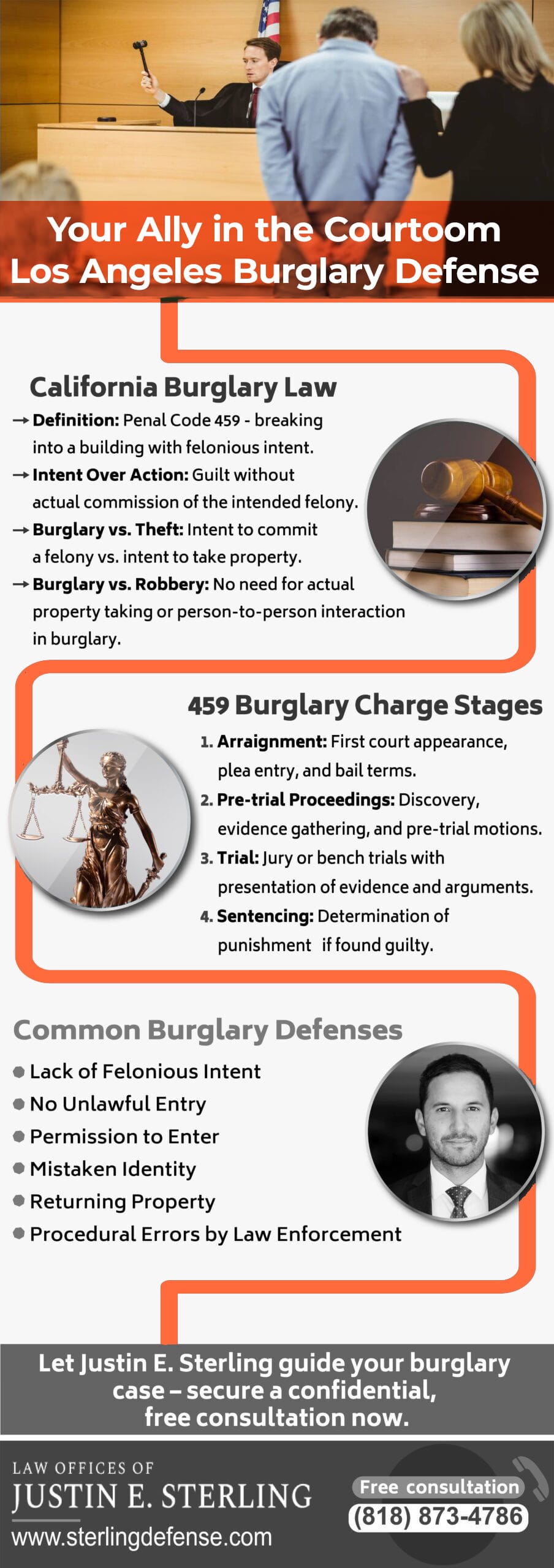
Being arrested for burglary can be overwhelming. The potential consequences are scary, and the uncertainty can make the situation even worse. You may be stressed out over questions like: Will I go to jail? Will I lose my job? What will happen to my family?
Just keep in mind: An arrest is not the end of the line. There are many defenses to burglary charges, and there will be many opportunities to improve your outlook with the right defense attorney.

At the Law Offices of Justin E. Sterling, we have been helping people in your situation for more than two decades. We can give you a straightforward assessment of your case and tailor a defense strategy aimed at getting the best outcome for you.
Contact us today for a free and confidential case review with a trusted Los Angeles burglary lawyer.

“Justin is an excellent trial lawyer who cares deeply for his clients.”
-Superior Court Commissioner